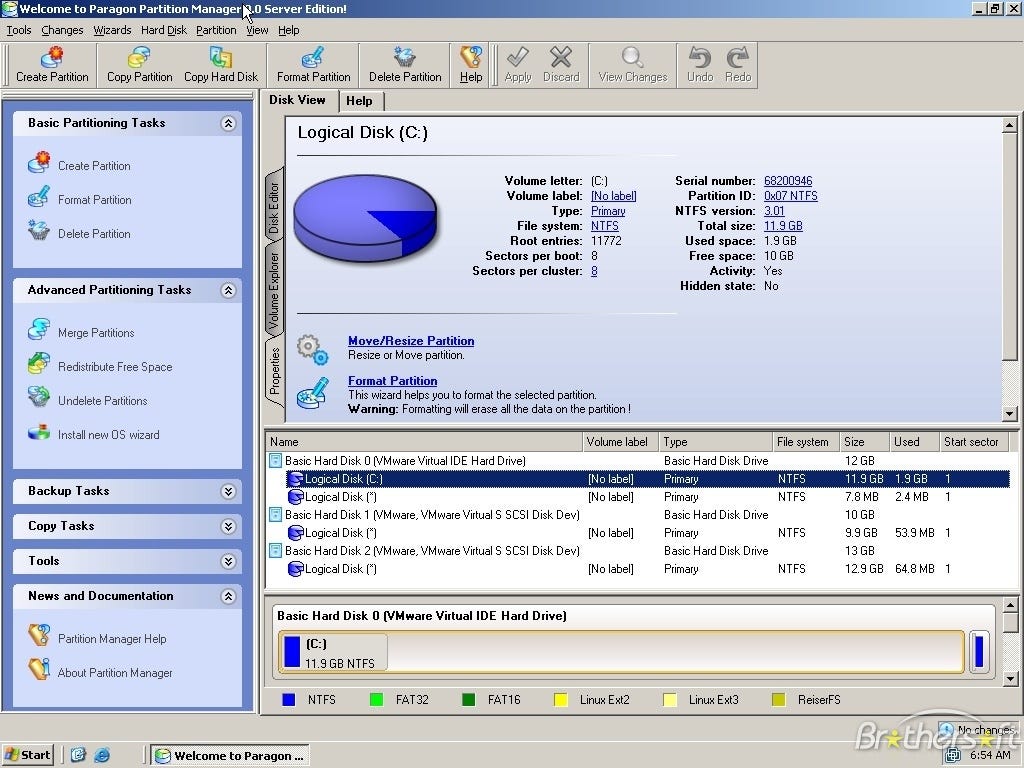
Solution 1: Select MS-DOS (FAT) format type and it would be compatible with MAC and Windows as well. The FAT is an ideal file system to use for USB flash drives or external hard drives that are intended for use in environments with multiple operating systems. The primary downside to using FAT is the size limit. You can override that problem by using exFAT, though you will lose some compatibility with older versions of Mac OS X and Windows. Solution 2: The NTFS file system is another option to use for Windows formatted drives and volumes, but it has limited compatibility with Mac OS by default. Mac users can mount and read NTFS formatted Windows drives, making NTFS compatible with the Mac on the reading and mounting front, but writing to an NTFS drive requires third party software. This is less than ideal for most users however, so while NTFS is compatible with a Mac and Windows PC, if you want to do heavy file sharing between the two with a lot of reading and writing, you may be better off formatting a drive as FAT as discussed above.
Remember, formatting a drive erases all data on it.
How to make external hard drive compatible with Mac and PC? You can format the drive from either the Mac or the Windows machine. After that, you can use your external hard drive on both Mac and Windows machine. AOMEI Partition Assistant is such a great simple tool for formatting external hard. How to Delete and Merge Partitions on Mac Hard Drive. Summary: The post explains the method to delete a partition as well as merge two partitions on the Mac hard drive.It also describes the method.
Video editors will often find that they need to share files between a PC and a Mac. Use these steps to format external hard drives for both operating systems. Top Image via As a video editor or, you will often need to share files with others.
Eventually you will find out that you may not be working on the same operating system (OS) as others. If you work solely on a Mac, but need to send files to someone working on a PC, your external hard drive needs to be set up for both operating systems. Let’s take a look at the different types of formats, and which are best for video production. Formatting the Hard Drive A vast majority of video production will be done on a Mac or Windows operating system, so we aren’t going to cover Linux. Hard drives set up for use on Windows machines only will often use, while Macs will use.
That said, if you are using both a PC and Mac in the workflow, you’ll need to use a different format. Image from You may be using only Macs or PCs in your own office, but you will also need to take into account what type of machines your client is using. If you need to send them RAW files or an edited sequence, you will need to make sure the external hard drive is set up for both operating systems. To do this, you will need to use either or formats. This will allow you to use the hard drive on both a Mac and PC.
FAT32 is often used among general users, but FAT32 has limitations that can affect filmmakers. FAT32 has a maximum file size of 4 GB per file. The limitation affects both Mac and PC users. A single high resolution file can easily go over 4 GB, so Fat32 may not the best format.
The best format for video production is exFAT. The maximum individual file size for exFAT is 16 EB.
1 EB, or exabyte, is 1 billion GB. That said, if you are using smaller file sizes — FAT32 can suffice. Format Hard Drive (Mac) 1.
Connect the external hard drive to the computer. Click Go on the top tool bar, and select Utilities. Open Disk Utility. Select the external hard drive on the left-hand side. Click the Partition tab.
Change the Partition Layout from Current to 1 Partition. Click Options, Select Master Boot Record, and click OK. Name the hard drive with a name of your choice. Click the Format drop-down menu. Select exFat (or MS-DOS FAT for a FAT32 format).
Hit Apply, then click on Partition. Formatting Hard Drive (Windows) Image from 1. Right-Click on the Windows icon in the lower left-hand corner.
Select Disk Management. G suite migration tool for mac. Right-Click on the external hard drive in the Volume tab.
Windows vs mac for small business. WindowsvsMac which is better for a business. Comparisons between Windows and Mac • Physical hardware (Apple, Dell, HP, Lenovo) - expandable, some not.
Click Format. Name the hard drive. Select exFAT (or FAT for FAT32). Naming and Labelling Hard Drives If you will be using multiple external hard drives on a project, you’ll want to make sure to keep them organized. This includes the way you name the drive and how you label it. One of my personal tricks is naming all drives after an actor.
For instance, one project had several external drives, all of which were named after different characters — Mugatu, Megamind, Lord Business, and Ron Burgundy. Another project used characters — Forrest and Woody. Remember that external drives should be used temporarily — and all footage should be backed up elsewhere. To make sure everything is copied correctly. There are plenty of ways you can label your drives. You can simply use some masking tape or gaff tape, and then write the name of the drive. You can also use, which are the awesome stickers featured above.