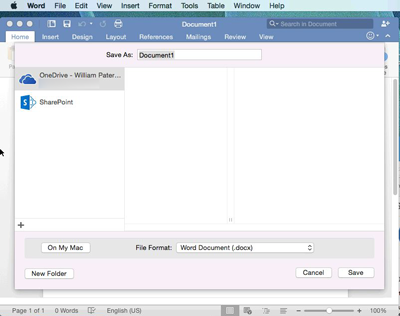
May 27, 2016 - By default, Office applications automatically save temporary backup. Identical in other Office 2016 applications like Excel and PowerPoint. Microsoft Office 2016 (codenamed Office 16) is a version of the Microsoft Office productivity suite, succeeding both Office 2013 and Office for Mac 2011, and preceding Office 2019 for both platforms. It was released on macOS on July 9, 2015 and on Microsoft Windows on September 22, 2015 for Office 365 subscribers.
I've been a Windows guy since I got my first computer many years ago. Just bought a 27' Mac three months ago and love it. I installed MBAM a few days ago without any problems. 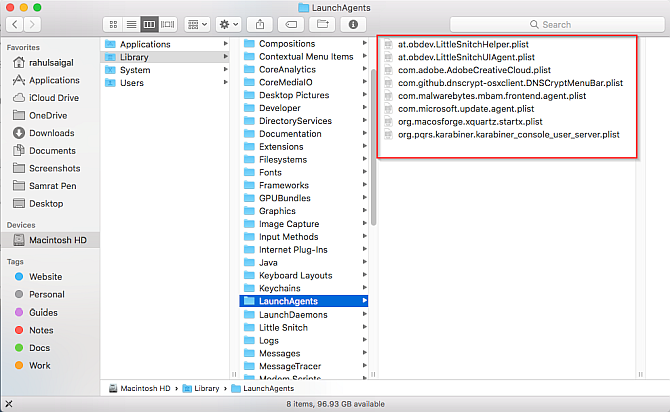 Download Malwarebytes for Mac (the free version) and you get a 14-day trial of the premium version with automatic (real-time) virus and malware protection. After 14 days, your trial reverts to a limited disinfection scanner. If you are troubleshooting installation issues with Malwarebytes Anti-Malware for Mac, p ress SHIFT + COMMAND + G, then enter the following file path: /var/log/install.log Save the install.log file to your desktop. Windows XP: C: Documents and Settings All Users Application Data Malwarebytes Malwarebytes Anti-Malware Logs; Other OS versions: C: ProgramData Malwarebytes Malwarebytes Anti-Malware Logs; If you have installed Malwarebytes in a non-standard installation path, these locations will be different.
Download microsoft word 2011 for mac. We’re not talking here about when you’ve actually in Windows, though there are ways you might from that kind of mishap as well. Also, you’d be well served to put some additional preventative measures in place before you actually run into this problem. Regularly and consider turning on the feature in in Windows.
That said, if you do run into a problem with an unsaved Office file, here’s how to recover it. How to Recover an Unsaved Office File For these instructions, we’re working in Word 2016, but the steps are almost identical in other Office 2016 applications like Excel and PowerPoint. Also, the recovery feature has been around for a long time, so if you’re using an older version of Office (going back to at least Office 2007), you’ll still be able to attempt recovery.
You might just have to hunt around a bit for the actual commands. Start by opening whatever Office application you were working in where your file didn’t get saved. Click the File menu. On the File menu, click Info.
On the Info page, click “Manage Document” and then, from the drop-down menu, choose “Recover Unsaved Documents.” Note also that you have an option for deleting all unsaved documents should you want to do that. The UnsavedFiles folder contains all unsaved files Office has created temporary backups for. Select the file you need and then click Open.
Office applications automatically save temporary backups of files at periodic intervals (every 10 minutes, by default), so your file should contain most of the work you lost. Change How Office Applications Automatically Save Files You can also change how each Office application saves these temporary files, including where the files are saved, how often they’re saved, and whether a temporary file is kept if you close a document without saving. Back on the File menu, click Options. On the Options page, click Save and then look for the “Save Documents” section. The top few options are what you’re looking for. If autosaving every 10 minutes seems like too long an interval (it does to us), bump that setting down to whatever you want.
You can set it to autosave anywhere from every one minute to every 120 minutes. We’ve found that the background saving doesn’t really interrupt anything, so usually set it down to around two minutes. We recommend keeping the other two options at their default settings, unless you have a good reason to change them. And that’s about it!

The Office recovery feature won’t save you from every kind of mishap you might run into with your files, but it can sure come in handy during those occasional moments of panic.