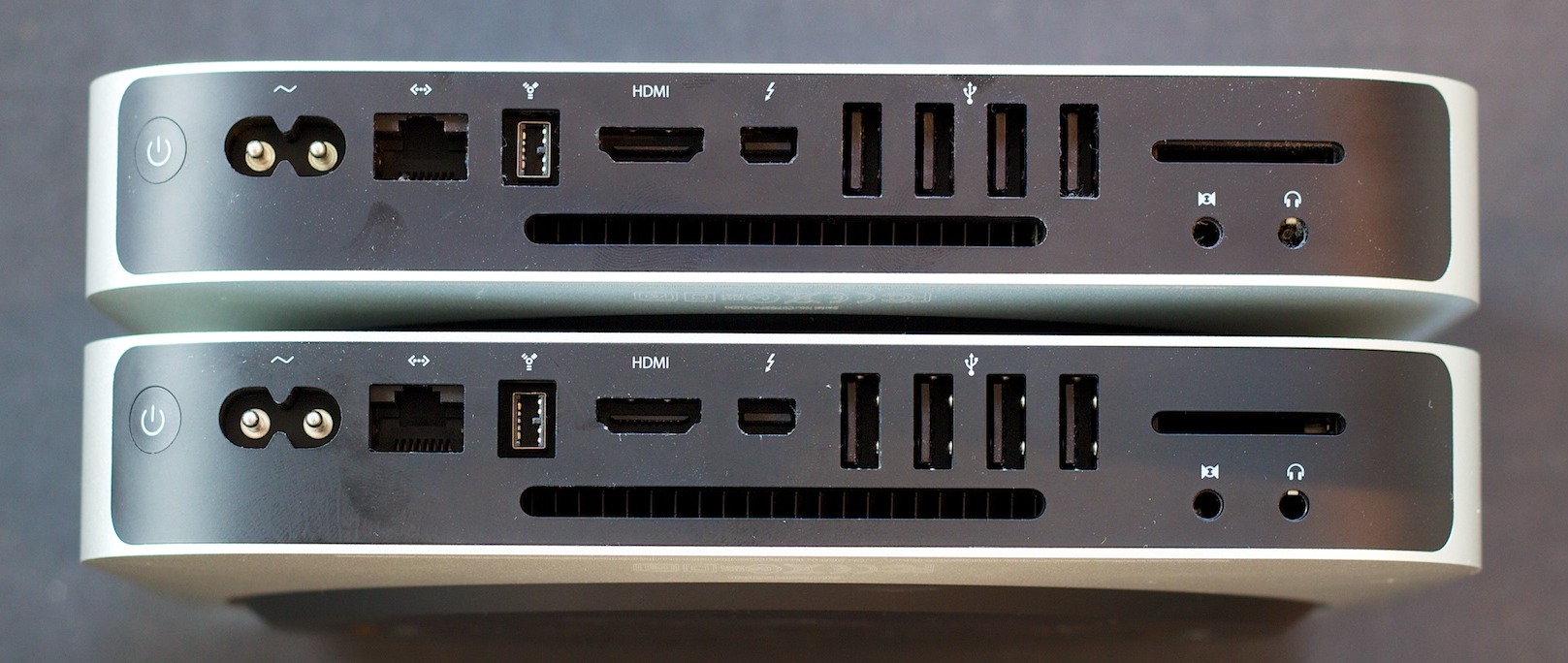
Mar 26, 2014 - Will Apple increase the requirements for OS X 10.10? IMac, Late 2009; Mac mini, Late 2012; MacBook Air Mid 2012; MacBook Pro Mid 2010.
As I’ve spotlighted over the past month, the best way to dramatically speed up an older Mac is to. The process is and,, and, yielding 3X to 5X speed boosts. But there’s another option that can speed things up with relatively little effort or expertise: upgrading your Mac’s RAM. RAM upgrades are easy and cheap. You can expect to pay $90 or less for enough (Mac-safe) RAM to run OS X Yosemite without hiccups, or $180 for enough RAM to guarantee you won’t need more for years.
Installing RAM generally doesn’t void your Mac’s warranty, and except for several models, the only tool you’ll need is a small screwdriver. Below, I’ll walk you through your best options.
Unlike PCs, which require manual maintenance to clear temporary file caches, the Mac's UNIX-based operating system is designed to automatically run maintenance and clear temporary files. You can: Look in your trash for a 'Recovered items' folder. Go to the Finder, select Go > Go to folder, type /private/var/folders and look for files named 'Word Work File' inside a 'Temporary items' folder.* Option drag files or folders to the Desktop (or anywhere else) before dropping them on Word's icon. How to recover unsaved Word document on Mac using Temporary Folder. Go to the Finder, Choose Go -> Go to folder. Type /private/var/folders and find the files named “Word Work File” inside a “Temporary items” folder. Option drag folders or files to the Desktop (before dropping them on Microsoft Word’s icon). Do not delete anything. In Word 2016, the AutoRecovery folder is buried deep in the system and requires your Mac to display hidden files, so the first step is to reveal these secret folders, to do so we recommend. Temporary location for word files on mac.
Without getting too technical, RAM (random access memory) typically refers to a small replaceable circuit board full of memory chips, designed to give your computer a high-speed temporary work space — the place where apps and data are stored while you’re actively using them. More RAM lets your computer run bigger apps and more apps at the same time, reducing or eliminating the need to continuously load data from your hard disk or SSD. Most current Macs ship with 4 or 8 gigabytes (GB) of RAM. Several years ago, there were more 4GB Macs out there, but today, if you don’t have at least 8GB of RAM and are running OS X Yosemite, you probably would benefit from more RAM. I personally have 8GB in my Retina MacBook Pro and 12GB in my iMac; neither has obvious RAM-related issues.
By contrast, 4GB Macs are very limited in running multiple apps at once, while 16GB machines aren’t much different from 8GB or 12GB Macs except when running professional-quality (generally video editing) apps. If your Mac can run Yosemite, it can probably be upgraded to at least 8GB of RAM, if not more. Apple typically makes Mac RAM swaps as simple as using a small screwdriver to open a panel, where you push down on clips to release the RAM boards, then pop the new RAM into place. Most Macs have two RAM slots, each arriving filled, such that a 4GB Mac will have two 2GB RAM boards inside, and an 8GB Mac will have two 4GB RAM boards inside.
Many iMacs and all Mac Pros have four slots. While the iMac uses high-quality but consumer-grade RAM, the Mac Pro typically uses some of the most expensive RAM available, and the base model currently ships with 12GB of RAM installed. Image courtesy iFixit How Can You Be Smart About Swapping RAM? I’ve upgraded the RAM in numerous computers over the years, and learned a hard lesson in the process: do not under any circumstances attempt to cheap out when you’re putting new RAM into a Mac.
Let me repeat that: whatever you do, do not cut corners on RAM. Windows PCs (and, indirectly, their owners) tend to be somewhat tolerant of imperfect RAM. System crashes, app crashes, failures to boot — these sorts of problems are common enough with PCs that it’s hard to trace their causes. I’m not saying this to be snarky; bad RAM is only one of a bunch of factors that can contribute to a PC’s instability.
But on Macs, I’ve found that these sorts of issues very commonly come down to bad RAM, more specifically, cheap RAM that worked fine when it was purchased but started exhibiting problems after a system update. You might save $10 or $20 on RAM that seems trouble-free with OS X Yosemite, but has issues with the next OS X release. I’ve personally seen this happen, and in the process of trying to figure out what went wrong, I’ve read hundreds (if not thousands) of identical user complaints on Apple’s Support Discussion Forums.
Cheap RAM is a far more common failure point for Macs than people realize. You can replace the RAM boards separately, but it’s generally wise to swap pairs of two at the same time to avoid any subtle specification differences between the old and new RAM.

Historically, it was considered safest — though not mandatory, and I don’t always follow it — to have the same amount of RAM in each of two slots. (Four-slot machines could have two separately matched pairs.) Your best move is to buy the right RAM from a reliable vendor on day one. For this particular type of upgrade, I personally recommend.
It’s highly visual, cleanly organized by Mac model, and makes very clear what your specific machine’s RAM options are — including online installation videos to show you what needs to be done. I’ve also used in the past, with mixed results — one of my “works today, fails a year later” RAM experiences was a Crucial upgrade, but if you’re tech-savvy enough to sort through confusing part numbers, Crucial’s RAM can be good. Sometimes Crucial’s prices are lower than OWC’s, but OWC’s installation videos and the absence of post-purchase problems have tended to be worth the small premium. I’ve been very happy with the OWC parts I’ve purchased for Mac upgrades, including the ones featured in my. Mac-Specific RAM Guidance As long as you follow a single guideline — get at least 8GB of RAM for your Mac — pretty much any older Mac you want to upgrade will be better off than it was before.