Advertisement Microsoft Word is the de facto standard program for Microsoft Office documents, from research papers to This guide examines the elements of a professional report and reviews the structuring, styling, and finalizing of your document in Microsoft Word. But sometimes you have data in another program that you need to reference; it might be in Microsoft Excel, it might be a PDF, it could even be another Word document. Knowing how to import that data can save you a lot of time.
In this article, we’ll cover eight different ways you can import information into your Microsoft Word documents; some will be useful for things like reports, others will be good for form letters and similar projects, and others will just save time in a few specific situations when you need something Our knowledge about Microsoft Word is tested every time we get a document to work on. Every little tip learnt along the way helps.
How about ten more tricks for your daily productivity? Since Microsoft Excel is the most versatile resource to import data from, we’ll start there. Import a Table From Microsoft Excel A table is more than a mere grid of cells. In Word, tables are not just containers for data but essential formatting tools. Find out how to manage this dual role with eight simple tips. That’s why Microsoft Excel exists, right?
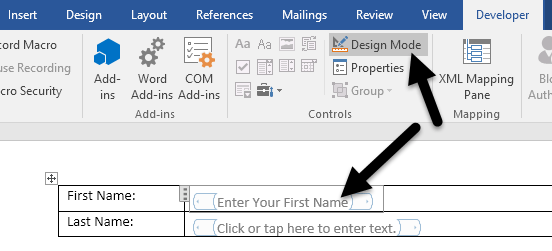
Alternative player to itunes for mac. Creating Fillable Forms Using Microsoft Word. In the example below are two plain-text boxes inserted into a simple table for first name and last name.
Fortunately, Microsoft had the foresight to let you include tables directly from Excel into your Word document so you can do all the formatting in Excel, where it’s a lot easier. To get started, select the cells you want to copy in Microsoft Excel, hit Edit > Copy, and head back over to Microsoft Word. If you select Paste instead of Paste Link, your cells won’t update when you make changes in the spreadsheet. It does have the advantage, however, of working whether the Excel sheet is present or not. So if you’re not going to need updates — if you’re printing, or you’re going to email the file to someone else and it needs to show the correct data, for example — you might want to use Paste. Import a Single Cell From Microsoft Excel You can also use the same method as above for individual cells: In this case, instead of selecting Microsoft Excel Worksheet Object, I selected Unformatted Text; this is why the number comes in with the same formatting as the rest of the Microsoft Word document. It still updated in the same way, but you don’t have to deal with trying to get the text box in the right place.
You can use this same strategy with an entire table, if you want to keep the formatting consistent with your Word document, too. If this isn’t working, or you need a more complicated behavior from your single cell, you can try using During your work week, there are probably lots of times that you find yourself copying and pasting information from Excel into Word, or the other way around. This is how people often produce written reports.
Into your Word document. Import a Graph or Chart From Microsoft Excel Like importing a table, it can be very convenient to import a graph or chart from Microsoft Excel into Word, so that it automatically updates whenever you make changes to the Excel spreadsheet. This could be especially useful if you have to create regular reports that include graphs. Fortunately, Microsoft has made this process extremely easy: just copy and paste the graph from Microsoft Excel into Word. You can also click and drag the graph from Microsoft Excel to Word to embed it in the file. Either way you go, the chart will now automatically update whenever you make changes to the original spreadsheet.
Mail Merge From Microsoft Excel A mail merge lets you create a large number of letters, labels, envelopes, or just about anything else in Microsoft Word using data from Excel. Brad’s article on Are you still using copy-and-paste to create labels, name badges, or other personalized mass communications? Mail Merge, a simple Microsoft Office automation tool, will let you print your labels in seconds. Covers the topic in more detail than I ever could, but the short version is that you’ll use Tools > Mail Merge Manager to select your data source and create the template in Microsoft Word. If you’re using an older version of Microsoft Office, this Are you still using copy&paste to create labels, name badges, or otherwise customized documents? Let us show you a simple Microsoft Office automation tool that will save you hours! Might be of use, and you can even use. It can take a while to get the hang of using mail merge, but once you get it, it will be one of the most useful tools in your Office arsenal.
Importing PDF Files A quick word of warning: when you import a PDF into Microsoft Word, it basically comes in as an image file, and not text. If you want to be able to select or modify text, you’ll need to copy and paste it from the PDF file.